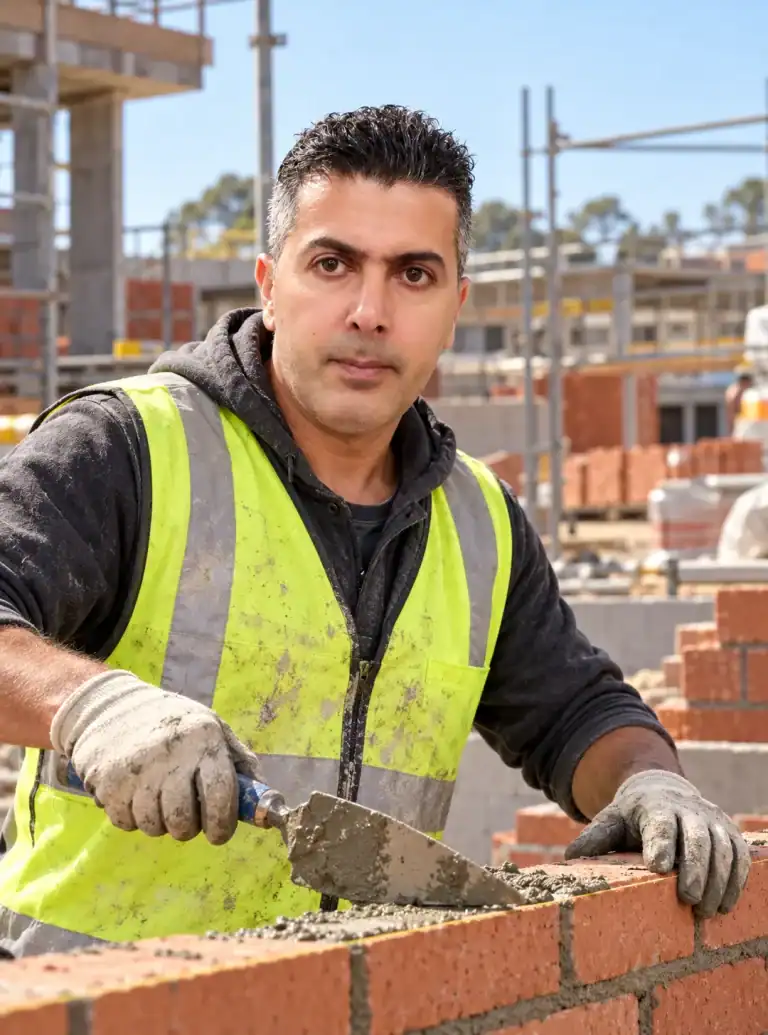
Keeping a Site Team in Step During Masonry Work
Construction is a team effort, even when one person is responsible for a particular stretch of wall or paving. Across my work…
Construction is a team effort, even when one person is responsible for a particular stretch of wall or paving. Across my work in northern Iran I have learned that the quality of my own masonry depends partly on clear communication with the people around me. I need to know the intended sequence, where other work will meet mine and when a question should be raised before it becomes a larger problem.
At the beginning of a task I read the available instructions and look at the actual site. I ask about anything that is unclear, especially dimensions, openings or changes from the plan. Once work starts, I keep checking my line and level and make sure access and materials are practical. A well-organised area helps the team move safely and makes it easier to see the work clearly.
My named project examples range from foundation work in Mazandaran to walls in Chalus, stair construction in Kelarabad, paving in Babol and setting out in Ramsar. They are different tasks, but the need to cooperate with others runs through all of them. I describe my role as hands-on execution. That includes speaking up when I see a mismatch and listening to the people responsible for drawings, supervision and the next trades.
I value a straightforward working relationship. If something needs a decision outside my role, I do not invent an answer. If a detail is mine to complete, I take care of it and make the result clear for the next person. Those habits may not make dramatic photographs, but they matter to a reliable site. An employer needs someone who can work steadily, follow the plan and contribute to the whole job. That is the kind of bricklayer and blocklayer I aim to be.
I keep that in mind when joining a new team or discussing a new opportunity.